
We’re all feeling it – drained, tired, done with whatever chaos 2020 has left for us. This year has been epic….just not in the way we had planned. If you’re close to giving in to the dark thoughts and crippling depression or just want to throw in the towel keep reading. Maybe, together, we can find how we can survive this apocalyptic year. First, let’s talk about where we are at right now. I don’t know about you, but I’m mentally exhausted.
Mental exhaustion is also referred to as Burnout—“a state of physical, emotional, and mental exhaustion caused by long term involvement in emotionally demanding situations” (Pines and Aronson, 1988, p. 9). MENTAL EXHAUSTION is caused by long term distress. It can be described as feeling stuck, like everything is too much at once or too hard to overcome. It varies in degree and description from person to person and may even be described as feeling apathetic, having an IDC attitude; also known as ‘having 0 F’s left to give’.
SYMPTOMS/SIGNS include:
- Head and body aches
- IBS
- Insomnia or Excessive Sleep (sleeping too little or too much)
- Anxiety
- Feeling like something bad is about to happen
- Depression
- Feeling hopeless/helpless
- Anger/Rage
- Trouble focusing and being present
Some symptoms manifest in a change in behaviors –> Isolation, making excuses, calling in to work, outbursts, and withdrawal from social circles. The point of this knowledge is to recognize these symptoms in ourselves and others. Not to judge, condemn, or offer advice…but to connect and encourage.
Mental exhaustion is a very real mental and physical thing. To briefly overview the science of it – The brain produces a chemical called cortisol, a stress hormone released by the adrenal glands. It’s normal to go through stressful situations. Our body’s natural response to produce this hormone is healthy and normal. When the stress or situation has passed, everything goes back to normal. However, long-term stress and the continued release of cortisol has negative effects on the mind and body. Anxiety, racing thoughts, and lack of concentration are just a few ways it can affect us. Increased blood pressure, sleep problems, heart palpitations, gastrointestinal problems, and a weakened immune system are some physical affects of long-term stress.
In my local community and all along the gulf coast, the intense and consistent stress of this hurricane season, in addition to this year’s craziness, has done some significant damage to our mental and physical states. We are all different and some people may see no changes in their mental. However, the distress of the event and the recovery process still can generate a wide range of responses—including stress, anxiety, grief, sleeplessness, fatigue, irritability, gastrointestinal distress, and poor concentration (Freedy and Simpson, 2007). Unfortunately, some people will develop problems or see an increase in symptoms. Some people who were already dealing with pre-existing mental and physical health issues are struggling to manage with few resources, unstable housing conditions, and immeasurable loss.
So what’s the solution? How can I deal with the mounting negative thoughts?
If you thought I was going to say, “You should just try to be more positive!” (in my brightest, most optimistic, rainbows and unicorns fairy voice). Sorry to disappoint, no. I love to discuss the power of positive thinking! It can be a life-changing and motivating force when utilized correctly. However, there is also something called “toxic positivity“. Sounds like an oxymoron, but it’s an actual term and you may be able to relate. This table is a great breakdown of what toxic positivity sounds like.
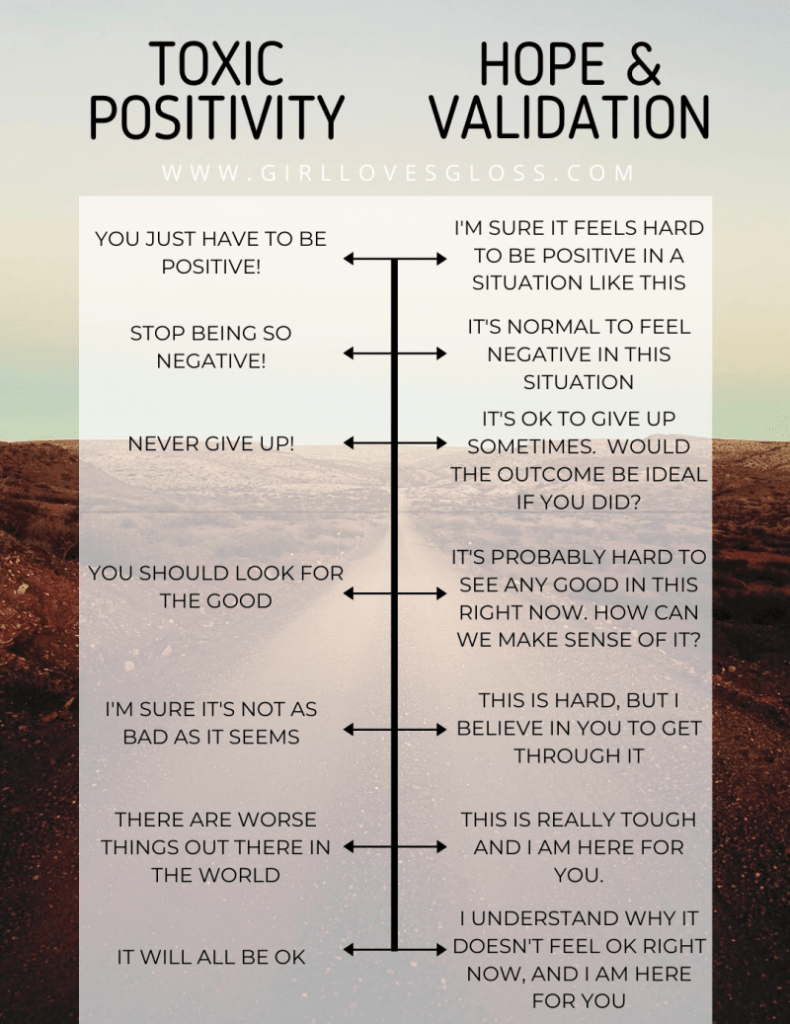
According to Quintero and Long (2020), “Just like anything done in excess, when positivity is used to cover up or silence the human experience, it becomes toxic. By disallowing the existence of certain feelings, we fall into a state of denial and repressed emotions. The truth is, humans are flawed. We get jealous, angry, resentful, and greedy. Sometimes life can just flat out suck. By pretending that we are “positive vibes all day,” we deny the validity of a genuine human experience.”
What’s the miraculous remedy to the mental weight oppressing us all?
Let’s start with TRUTH. Honestly, how are you? (If your first mental thought was, “I’m good” you may need to do some deeper self-reflection.) I’m not great with acknowledging my feelings. The word alone makes me shudder….feelings. Like me, maybe you need to remind yourself: Feelings/emotions exist and are a relevant part of a healthy, functioning adult life. So here we are. Find a feeling word — glad, mad, sad, scared, stressed, apathetic…… think about what you’ve been thinking about and associated feelings. Have your thoughts been more positive or negative lately? Have your thoughts been calm or racing? Not to say it’s good or bad, simply observe your thinking habits.
Does the support family, friends, and peers offer feel like toxic positivity or hope/validating/accepting statements?
Does the support you offer others reflect toxic positivity or hope/validating/accepting statements?
I will not offer you toxic positivity or shame you for the feelings and emotions you have if you’re in a dark place. I want to encourage that there is hope in your situation and I support you where you are. Life is kind of sucking right now for countless people and it’s hard to keep pushing right now, but we must. I like to call myself an optimistic realist. Your situation, trauma, loss, tragedy, experience…whatever it is…is real. You experienced it and it happened. Now where do you go from here?
How can we manage mental exhaustion?
Some of us have already heard the usual advice to healthy ways of coping with stress. Forget what’s popular or what everyone is doing. What works for you? What do you enjoy? What fits your life and habits? There are 3 universal ways to cope with mental exhaustion that we all must utilize to function.
- Talk to God.
- Talk to others.
- Talk with self.
- Talk to God.
The LORD is near to the brokenhearted and saves the crushed in spirit.
Psalm 34:18
Prayer, meditation, and journaling/reading the bible are great ways to talk to God. It really is very simple. When you wake up or go to bed, talk to God! Pray out loud or to yourself. Just talk. Your creator and father in heaven wants to hear and commune with you.
What’s keeping you from close and intimate connection with God?
I find the “I’m unworthy” mindset to be the most common and most relatable. I want to share a mind-blowing and maybe offensive perspective I became aware I had after a friend corrected me. I will, of course, paraphrase. The feeling of unworthiness can stem from many things: a haunting past, current struggles and addictions, toxic behaviors, and low self-esteem.
Our thinking and even relationships with other human beings can blind us to the true nature of God. When someone lies, cheats, or steals from you then you will respond with anger, hate, distrust, and resentment. That is normal and human. We feel we deserve the same when we sin or turn from God. It is an ongoing battle for some to accept that we do not receive what we deserve. The God of the universe is not a human being and does not think like us. It’s difficult to grasp the full meaning of this.
19 God is not a man, that he should lie; neither the son of man, that he should repent: hath he said, and shall he not do it? or hath he spoken, and shall he not make it good?
Numbers 23:19 KJV
Genuinely repent and your sins are forgiven. It really is that simple. We bitterly reminisce on the past and WE refuse to let it go. Our own regret, guilt, and emotions bind us to the past. How can it be that easy? Sin and disobedience separates us from God. He is Holy and requires the same of us. However, this is often not the primary factor keeping us from God.
It’s our stubbornness and pride. In our minds, we think we are not good enough and withdraw from his presence because we are not worthy. When you start thinking things like, “When I get my life together, I’ll get back into church.” or “God can’t use (or love) someone like me.” You have actually become prideful. [Mind blown!] We like to think it’s because of humility that we refuse to bring our filth and unworthiness into the presence of God.
Jesus Christ died on the cross for our sins.
His love covers a multitude of sins.
He gives a greater grace!
Is it not enough for you? Who are you to challenge the Word of God and refuse the love God has for us? Humility is bowing down and accepting the love and forgiveness Christ has for us. When I first heard this question, I was so offended! They didn’t understand. I was trying to live right and failing, so I withdrew from church and God. I didn’t want to be a hypocrite or a fraud. I did it because I thought that was me being humble and respecting God…..because I didn’t feel worthy.
But he gives more grace. Therefore it says, “God opposes the proud, but gives grace to the humble.”
James 4:6
No matter where you are, God gives grace if you genuinely repent and seek him first.
In conclusion, talk to God. Regardless of your circumstances or current mindset, start talking. Opening the door for God to encourage, uplift, and correct brings a ‘peace that is beyond understanding’. I don’t know about you, but PEACE is what I desperately need.
2. Talk to others.
We live in what’s called the “Age of Loneliness”. Finding support and connecting to others is more important than ever. However, it is easier said than done. This “Age of Loneliness” is a shadow over our lives, a societal norm that we’ve come to accept despite the isolation and sadness that results from it. We’ve become so comfortable with superficial relationships and falsehoods that we don’t even recognize it as such. To give you a better idea of the crap quality we accept as “relationships” and “connection”, here’s a comparison. 40 years ago people knew each other. You knew and conversated with your neighbors. The church was not just a place of religion, but a network of support and fellowship. Siblings and peers socialized (in person) and played games regularly. Families had dinner together (with no television or phones). You get the idea…..people were different and the connection between people was different.
So since this is the norm and everyone else behaves that way, how do you form deep, meaningful, honest relationships with the people you surround yourself with? Where can you find support if you have no one? Prepare for the cliché response….
It starts with you.
The words no one wants to hear, but need: OPEN UP. That doesn’t mean pouring out your heart to the nearest person. It means allowing someone in….even just a little. Start with basic honesty. I personally reached a place a few years ago where I wanted nothing to do with people. I’m at constant war with my inner cynic to avoid regressing to that mindset again. Life experiences, manipulative people, and broken trust caused me to put walls up. Once you’ve been vulnerable and another person (or people) take advantage, it’s difficult to trust someone again in that way. Most people can relate to an experience where their trust was broken. I isolated and didn’t allow love and support in. Then I met people far more depressed, angry, and traumatized than I. It shook me because I didn’t want this to be my life or relationships. How could I improve my relationships or change my self? For an entire year, my goal was to ‘Be more open.’ Very simple. That’s how long it took to reach my goal to be open to other people. I am not oblivious to the fact that not only is that odd, but unhealthy. I share my own story as an example that we are all capable of change! Decide today who you want to be, the relationships you want to have, and the habits/coping skills you CHOOSE to use. If you have family and friends, lean into the support you have. People, myself included, have a bad habit of looking at what’s in front of them and not seeing it. Accept the love and support you are offered. Not everyone has family or close friends. Find a local group to attend or seek out a professional. As long as you feel supported.
3. Talk with self. SELF-TALK
I remember being very young and having a realization that changed my life. I could have thoughts that no one else could hear! Your inner thoughts, or self-addressed verbalizations, are also referred to as “self-talk”. What goes on in that head of yours? Are your thoughts towards yourself positive or negative? Do you criticize or encourage yourself?
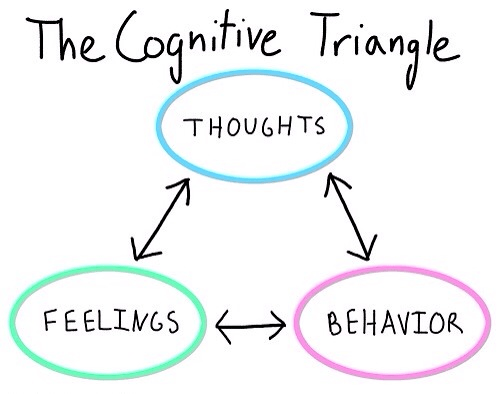
It all starts with our mind! If you want to change your behavior (stop a bad habit, get control over angry outbursts, change negative thinking), you must observe and focus on your thought life.
Throughout the day, pause and observe what thoughts are going through your mind. We are truly transformed by the renewing of the mind! Renew, refresh, and restore my mind, O’Lord! Being positive does not mean everything is always great and you will not ever feel negative emotions. It means that even in a situation where you may feel helpless, you are not hopeless.
Nothing is happening because you hope it does. You have to actively choose to change your thoughts.
INSTEAD OF………
I suck at this.
I’ve always been this way.
I’m an idiot because of the dumb mistakes I’ve made.
I’m not good at this.
I don’t want things to change, this has always worked for me.
I don’t care.
I’m a bad person.
SAY TO YOURSELF…..
I will try a different way.
I am capable of change.
I have more wisdom from my experiences. I know what doesn’t work and I can try again.
What am I missing?
I’m continually learning new ways to manage my life and find happiness.
I can learn.
I did bad things.
Changing your mindset and learning to change your self-talk will transform your life.
In conclusion: talk to God, open up to others, and keep your self-talk positive.
REFERENCES
Freedy JJ, Simpson WM. Disaster-related physical and mental health: A role for the family physician. American Family Physician. 2007;75(6):841–846. [PubMed]
Quintero, S., & Long, J. (2020, October 08). Toxic Positivity: The Dark Side of Positive Vibes. Retrieved October 15, 2020, from https://thepsychologygroup.com/toxic-positivity/
Pines A, Aronson E. Career burnout: Causes and cures. New York: Free Press; 1988.
 Console the Soul